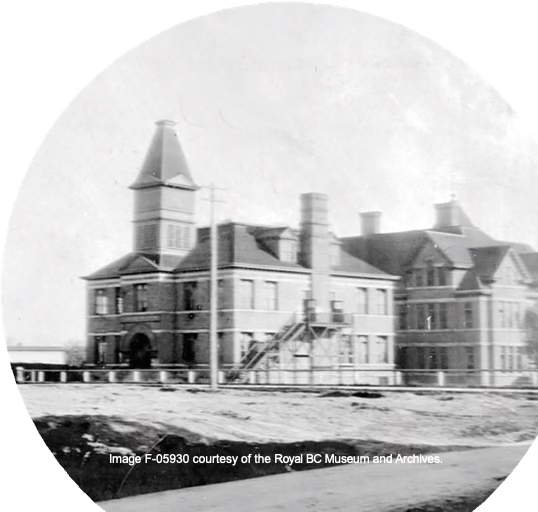
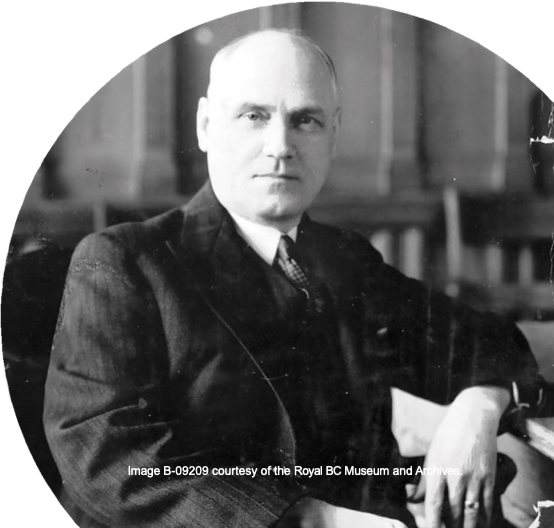
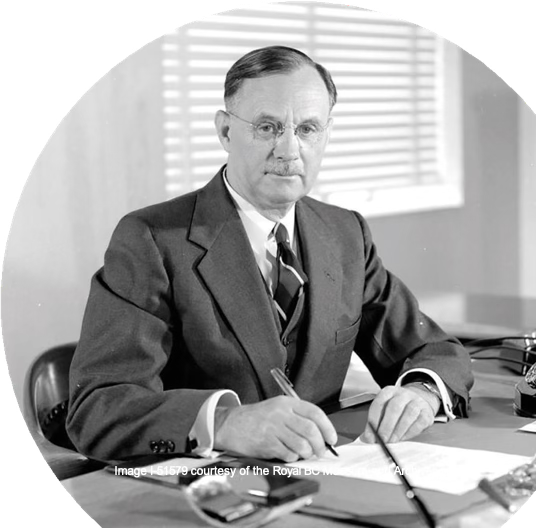
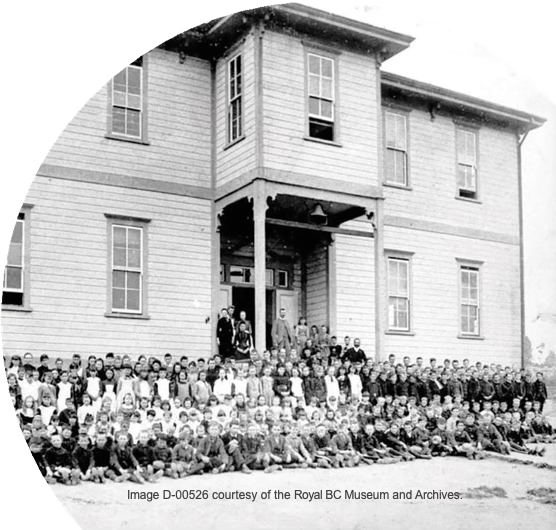
B.C.’s Education Office is recognized as a “depart- ment” of government.
1925
J.H. Putman and G.W. Weir’s survey of provincial schools is published.
1928
Lottie Bowron is appointed as a women’s welfare officer.
1929
The Wall Street Crash signals the beginning of the 10-year Great Depression.
1932
There are 830 school districts in B.C.
1935
H.B. King is appointed technical advisor to the minister of education. In 1939 he is appointed chief inspector of schools.
1946-47
B.C.’s 800+ school districts are consoli- dated into 89 larger districts.
1958
The position of school inspector is replaced by government- appointed district superintendents.
1960
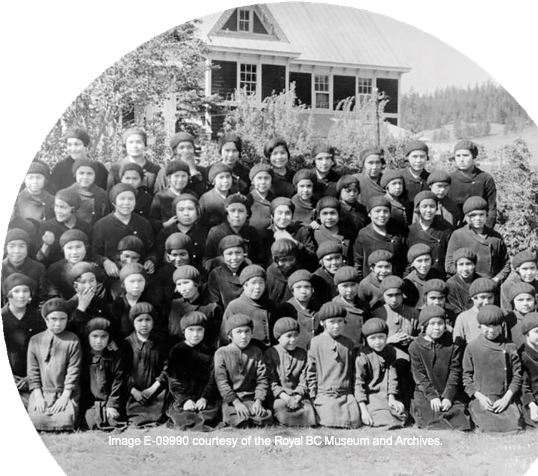
The British Columbia Royal Commission on Education is released. Residential schools begin to close.
1963
An article in The B.C. Teacher calls for provisions for maternity leave.
1965
Frank Levirs is made superintendent of education.
1969
Frances Fleming becomes the first female administrator in a Vancouver secondary school.
1970-71
The provincial education budget equals the entire provincial budget of nine years earlier.
1974
The government grants seven of the province’s 75 school districts permission to hire school leaders of their choice.
1975
The Nisga’a School District is created.
1977
The provincial government develops a learning assessment program.
1978
The special program branch of the Ministry of Education is reorganized to facilitate disabled children being integrated into schools.
1980
The School Act Regulations are amended to permit all school boards with enrollment of more than 250 students to appoint a local superintendent of schools.
1984
Provincial exams are re-introduced.
1985
Education Minister Jack Heinrich establishes a provincial school review committee.
1988
A Royal Commission on Education produces its report: A Legacy for Learners.
1989
The government launches an ambitious school reform initiative: the Year 2000 program.
1994
The last of the provin-cially employed district superintendents retires.
1995
The Year 2000 program is cancelled.
2005
A First Nations Education Action Plan envi- sions the development and implementation of sustainable education systems under the full control and jurisdiction of First Nations.
2006
The Assembly of First Nations calls on the federal government to address the First Nations’ education crisis.
2009
The B.C. Ministry of Education, the Vancouver School Board, UBC, the Musqueam Nation, the Métis Nation, Coast Salish Nations, and the Urban Aboriginal People sign the Aboriginal Education Enhancement Agreement.
2010
The Assembly of First Nations launches a national call to action on education.
Karla proudly serves the communities of Vernon, Coldstream, Lumby, and surrounding areas on the ancestral and unceded territory of the syilx Okanagan people. With more than 30 years of experience in public education, her career has spanned Nova Scotia and British Columbia, including superintendent roles in Nechako Lakes and the Okanagan.
Throughout her career, Karla has provided leadership in strategic planning, system improvement, equity and inclusion, and organizational development, with a strong focus on building meaningful relationships across complex educational systems.
Karla is a strong advocate for professional learning, collaboration, and the collective voice of educational leaders. As a Director, she values the opportunity to contribute to provincial conversations, strengthen connections among colleagues, and help shape a future-focused public education system that enables all students to flourish.
Fun Fact: I am a proud East Coaster who has happily embraced the best of BC, especially hiking, skiing, and the life near the lakes. I love to travel, particularly when it involves good food and great company.